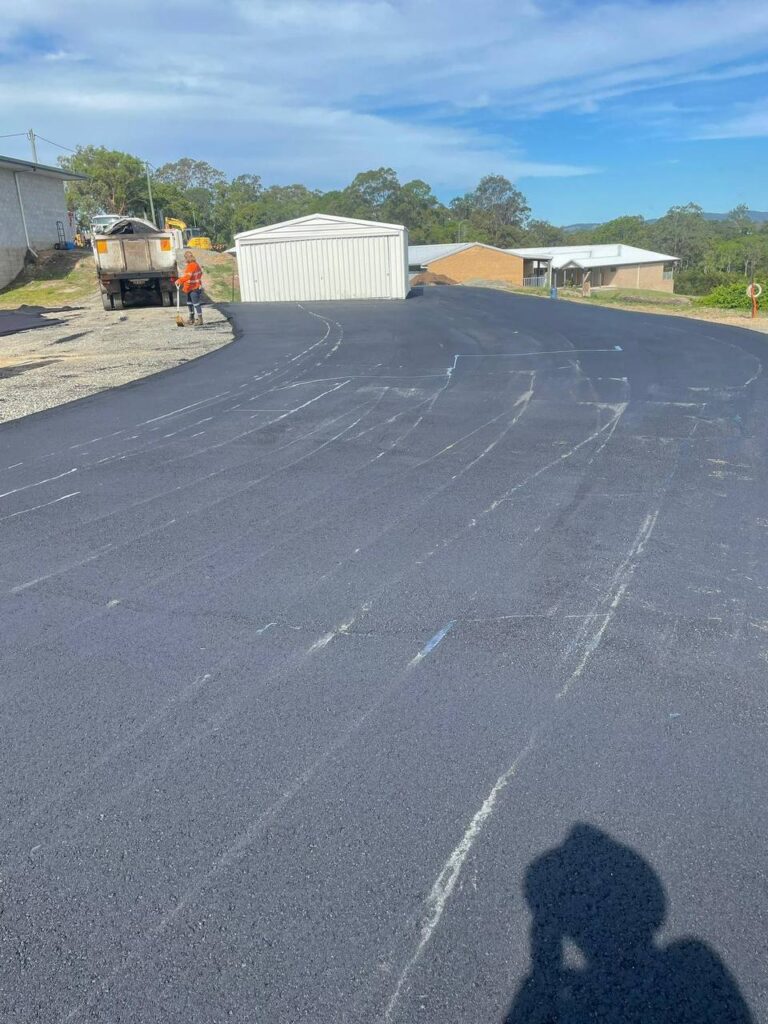
Commercial properties rely on durable and dependable surfaces to support daily operations. Whether used for vehicle parking, equipment storage, freight handling, or operational activities, a hardstand must be capable of withstanding significant loads while maintaining safety, accessibility, and long-term performance.
Not all hardstands are created equal. A surface that performs well in a residential setting may not be suitable for commercial demands. For businesses in Buderim, QLD, understanding what makes a hardstand suitable for commercial use can help ensure the surface delivers reliable performance for years to come.
At Buderim Surfacing Solutions, we specialise in asphalt and bitumen hardstand construction designed to meet the unique requirements of commercial and industrial environments.
What Is a Commercial Hardstand?
A hardstand is a specially prepared surface designed to support vehicles, machinery, equipment, and storage activities. Unlike standard paved areas, commercial hardstands are engineered to handle heavier loads and more frequent use.
Common commercial applications include:
- Equipment storage areas
- Transport depots
- Vehicle parking compounds
- Industrial yards
- Logistics facilities
- Agricultural operations
- Fleet management sites
- Loading and unloading zones
The suitability of a hardstand depends on several key construction and design factors.
A Strong Foundation Is Essential
The most important element of any commercial hardstand is the foundation beneath the surface.
The visible asphalt or bitumen layer is only one part of the overall pavement structure. The subgrade and base layers provide the strength needed to support ongoing traffic and heavy loads.
Without a properly prepared foundation, even a well-finished surface may develop problems such as:
- Cracking
- Settlement
- Rutting
- Surface movement
- Premature deterioration
Professional site preparation ensures the hardstand is built on a stable platform capable of supporting its intended use.
Load-Bearing Capacity
Commercial hardstands are often exposed to loads that are significantly greater than those found on residential properties.
Heavy vehicles, forklifts, delivery trucks, machinery, and stored equipment place substantial pressure on the pavement. The hardstand must be designed to distribute these loads evenly throughout the pavement structure.
Factors that influence load-bearing capacity include:
- Base thickness
- Material selection
- Compaction quality
- Expected traffic volumes
- Vehicle weights
Proper engineering ensures the surface remains stable under demanding conditions.
Effective Drainage Design
Water is one of the most common causes of pavement failure.
If water is allowed to pool on the surface or penetrate beneath the pavement, it can weaken the foundation and accelerate deterioration. This can lead to cracking, soft spots, and reduced pavement lifespan.
A commercially suitable hardstand incorporates effective drainage solutions, including:
- Correct surface grading
- Water runoff management
- Drainage channels where required
- Prevention of standing water
Good drainage helps preserve the structural integrity of the hardstand and supports long-term performance.
Durable Surfacing Materials
Commercial hardstands require surfacing materials capable of handling constant use.
Asphalt and bitumen remain popular choices because they offer excellent durability, flexibility, and reliability when installed correctly. These materials are well suited to commercial environments where surfaces are subjected to regular vehicle movements and operational activities.
Professional material selection ensures the hardstand is matched to the specific demands of the site.
Resistance to Daily Wear and Tear
Commercial operations often involve continuous movement throughout the day.
Vehicles entering and exiting the site, loading activities, machinery operation, and equipment storage all contribute to pavement wear. A suitable hardstand must be capable of resisting this ongoing stress while maintaining its structural performance.
High-quality construction helps minimise the risk of early surface deterioration and supports long-term functionality.
Accessibility and Operational Efficiency
A commercial hardstand should improve the efficiency of site operations rather than create obstacles.
Well-designed hardstands provide:
- Smooth vehicle access
- Safe manoeuvring areas
- Reliable loading zones
- Consistent traffic flow
- Improved workplace safety
The layout and design of the hardstand should align with the operational requirements of the business.
Flexibility for Future Needs
Commercial properties often evolve over time.
A hardstand that is suitable today should also accommodate potential future growth and changes in operational requirements. Professional planning allows for scalability and ensures the surface remains capable of supporting changing site demands.
This forward-thinking approach can contribute significantly to long-term usability.
The Importance of Professional Construction
Every commercial site has unique requirements.
Ground conditions, drainage patterns, traffic volumes, and intended usage all influence how a hardstand should be designed and constructed. Professional contractors assess these factors before construction begins to ensure the pavement is tailored to the site.
At Buderim Surfacing Solutions, we take a comprehensive approach to hardstand construction, focusing on preparation, drainage, material selection, and workmanship to deliver surfaces that perform reliably throughout Buderim, QLD.
Signs of a Well-Constructed Commercial Hardstand
A professionally built commercial hardstand typically provides:
- Stable load-bearing performance
- Effective drainage
- Smooth vehicle access
- Minimal surface movement
- Long-term durability
- Safe operational conditions
- Consistent surface quality
These characteristics help businesses maximise the usability and lifespan of their pavement investment.
Conclusion
A hardstand suitable for commercial use is far more than a simple paved surface. It requires careful planning, proper site preparation, effective drainage, durable materials, and sufficient load-bearing capacity to withstand the demands of daily operations.
For businesses and property owners in Buderim, QLD, investing in a professionally constructed asphalt or bitumen hardstand provides a reliable foundation for long-term success. Buderim Surfacing Solutions delivers expert hardstand construction and resurfacing services tailored to the specific requirements of commercial projects. If you are planning a new hardstand or upgrading an existing surface, our team can provide professional advice and practical solutions designed for lasting performance.
Call us on: 07 3113 9873
Click here to find out more about Buderim Surfacing Solutions
Click here to complete our contact form and see how we can help with your driveway needs.