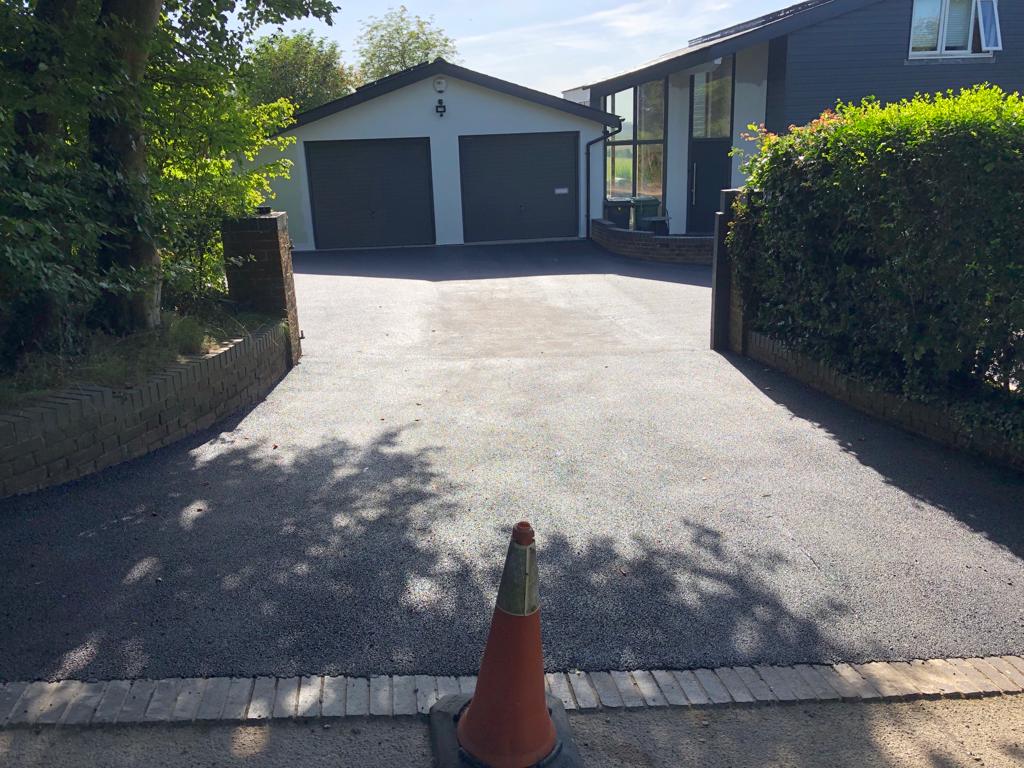
Asphalt is a versatile surfacing material used for everything from compact residential driveways to extensive commercial car parks, access roads and industrial hardstands. Its ability to provide a smooth, durable and practical surface makes it suitable for projects of different sizes, provided the pavement is designed and installed correctly.
However, the size of an asphalt project is not the only factor that determines its suitability. Ground conditions, drainage, vehicle loads, accessibility and the intended use of the surface all influence the construction method and preparation required.
For property owners and businesses in Buderim, QLD, understanding how asphalt performs across small and large projects can help ensure the right surfacing solution is selected for each application.
Can Asphalt Be Used for Projects of Any Size?
Yes. Asphalt can be used for both small and large surfacing projects, although the installation requirements can vary considerably.
A small residential driveway may involve a relatively straightforward layout with limited vehicle movements. A large commercial car park or access road may require more detailed planning, extensive ground preparation and a pavement structure designed to accommodate frequent traffic.
The fundamental principles of asphalt construction remain the same regardless of project size. The surface needs a stable foundation, appropriate drainage, suitable materials and correct compaction.
The difference lies in how these requirements are applied to the conditions of each site.
Why Asphalt Works Well for Different Applications
Asphalt is a flexible pavement material made from aggregates combined with bituminous binder. When installed over a properly prepared foundation, it creates a continuous surface capable of supporting regular vehicle movements.
Its versatility provides several advantages:
- A smooth and consistent finished surface
- Suitability for different pavement shapes and layouts
- Good durability when designed for the intended traffic
- Practical repair and resurfacing options
- Reduced loose material compared with unsealed surfaces
- The ability to accommodate residential and commercial requirements
- A neat appearance across both compact and extensive areas
These benefits make asphalt a practical choice for many projects, but its performance depends on the quality of the complete pavement structure rather than the surface material alone.
Is Asphalt Suitable for Small Residential Driveways?
Asphalt is well suited to many small residential driveways, particularly where homeowners want a practical surface for everyday vehicle access.
A compact driveway may experience relatively light traffic, but it still needs to withstand repeated vehicle movements, turning and occasional heavier loads.
Proper preparation is essential even when the area being surfaced is small.
If the ground underneath is unstable or poorly compacted, the finished asphalt may eventually develop settlement, cracking or uneven sections.
A professionally installed asphalt driveway provides a consistent surface that can improve access and reduce problems associated with loose gravel or deteriorating unsealed areas.
For residential properties in Buderim, QLD, asphalt can also be used to create defined parking spaces and improve the connection between a property entrance and its existing access areas.
Can Asphalt Be Used for Small Paths and Access Areas?
Asphalt can also be suitable for certain pathways, narrow access routes and smaller trafficable areas.
These applications often require careful attention to levels, drainage and connections with surrounding surfaces.
A narrow pathway may have limited space for installation equipment, while a small access area may require precise grading to prevent water collecting against adjoining structures.
The suitability of asphalt depends on whether the area can be prepared, paved and compacted appropriately.
An experienced contractor can assess the available working space and determine the most practical installation method.
Is Asphalt Suitable for Large Commercial Projects?
Asphalt is widely used for larger surfacing applications because it can provide a continuous, durable surface across extensive trafficable areas.
Commercial car parks, access roads and suitable hardstands can all benefit from asphalt construction when the pavement is designed around the expected operating conditions.
Large projects often involve more complex requirements than smaller residential installations.
These may include different vehicle types, concentrated traffic movements, drainage across extensive paved areas and coordination of the construction process.
Professional planning helps ensure the finished surface performs consistently throughout the site.
Asphalt for Large Car Parks
Large car parks require surfaces that accommodate regular vehicle movements, parking and manoeuvring.
Asphalt can provide a smooth and consistent finish across parking bays, entrances and circulation routes.
However, different sections of a car park may experience different traffic demands.
Main access routes and turning areas may receive more frequent loading than individual parking spaces.
These differences should be considered when determining pavement construction and preparing the supporting layers.
Drainage is also particularly important because larger paved areas can collect substantial amounts of rainfall if surface falls are not correctly established.
Asphalt for Access Roads
Access roads may vary considerably in length, width and traffic requirements.
Asphalt is suitable for many access road applications because it provides a bound surface that supports consistent vehicle movements.
For longer roads, maintaining appropriate levels and drainage throughout the route is essential.
The pavement must also be designed for the vehicles expected to use it.
A road carrying passenger vehicles may require different construction from one regularly accommodating delivery trucks or other heavy commercial vehicles.
Asphalt for Commercial Hardstands
Hardstands are used for vehicle parking, equipment movements, storage and other activities that place demands on the pavement.
Asphalt can be appropriate for certain hardstand applications, provided the supporting structure is designed for the intended loads.
However, some hardstands experience sustained heavy loading or concentrated pressure from equipment.
These conditions may require additional pavement strengthening or an alternative surface construction.
Professional assessment helps determine whether asphalt is suitable for the specific application rather than assuming that one pavement design will meet every requirement.
Does Project Size Affect Asphalt Installation?
Although the same basic construction principles apply, project size can influence how the work is planned and completed.
Ground Preparation Requirements
Every asphalt surface requires a suitable foundation.
For smaller projects, preparation may involve excavating a compact area, grading the ground and installing appropriate pavement materials.
Larger projects may require more extensive earthworks, adjustments to ground levels and preparation across several sections.
The objective remains the same: to establish a stable foundation capable of supporting the finished asphalt.
Drainage Planning
Small and large asphalt projects both need effective drainage.
For a residential driveway, this may involve establishing suitable falls to direct rainfall away from the trafficable area.
Larger commercial surfaces may require more detailed drainage planning because water must be managed across a greater area.
Incorrect drainage can contribute to standing water, moisture penetration and deterioration of the supporting pavement.
Traffic Requirements
The expected traffic is often more important than the physical size of the project.
A small loading area regularly used by heavy vehicles may experience greater pavement stress than a large car park used mainly by passenger vehicles.
The pavement design should therefore reflect vehicle loads, traffic frequency and operating conditions.
Installation Equipment and Access
Small sites can present challenges where access is restricted or there is limited room for machinery.
Larger sites may allow more extensive paving equipment to operate but require careful coordination to maintain consistent installation conditions.
Experienced contractors select suitable equipment and installation methods according to the project layout and available working space.
Why Is Professional Ground Preparation Important?
The long-term performance of asphalt depends heavily on the condition of the supporting pavement.
Even a high-quality asphalt layer can deteriorate if installed over weak or unstable material.
Before installation, the ground should be assessed for soft areas, unsuitable material, drainage problems and other conditions that may affect stability.
Preparation can involve excavation, grading, installation of suitable road base and compaction.
For small projects, careful preparation helps prevent localised settlement and premature cracking.
For larger projects, consistent preparation across the entire site is particularly important because variations in the supporting ground can lead to uneven pavement performance.
Professional ground preparation helps establish a reliable foundation regardless of the size of the area being surfaced.
How Does Asphalt Thickness Vary Between Projects?
Asphalt thickness should be determined by the intended use of the pavement rather than project size alone.
A small driveway used by passenger vehicles may require a different pavement structure from a commercial access area regularly carrying heavier loads.
Similarly, a large car park used mainly for light vehicles may have different requirements from a smaller industrial hardstand.
The required construction depends on several factors, including:
- Expected vehicle weights
- Traffic frequency
- Existing ground conditions
- Strength of the supporting pavement
- Turning and braking movements
- Intended use of the surface
Selecting an appropriate pavement structure helps reduce the risk of premature deformation, cracking and other forms of deterioration.
Can Asphalt Be Installed on Uneven or Sloping Ground?
Asphalt can be installed on many sites with varying ground levels, provided the area can be prepared appropriately.
Uneven ground may require grading, excavation or the installation of suitable supporting materials before paving begins.
Sloping areas also require careful consideration of drainage and vehicle access.
The objective is to create a stable, consistent surface with appropriate levels for the intended use.
Simply laying asphalt over existing irregularities is not always sufficient.
Where significant ground movement or instability is present, additional preparation may be necessary before installation.
For properties in Buderim, QLD, assessing the existing site conditions helps determine the most suitable approach to achieving a reliable finished surface.
Is Asphalt Resurfacing Suitable for Small and Large Areas?
Asphalt resurfacing can also be undertaken across areas of different sizes.
A small driveway with a worn but structurally sound surface may be suitable for resurfacing after appropriate preparation.
Likewise, a larger commercial car park or access road may benefit from a new asphalt wearing layer where the underlying pavement remains stable.
However, resurfacing should not be used to conceal significant structural problems.
If the existing pavement has deep rutting, widespread cracking, repeated potholes or unstable supporting layers, repairs or reconstruction may be necessary before resurfacing.
A professional assessment helps establish whether the existing pavement can be retained or whether more extensive work is required.
What Are the Advantages of Professional Asphalt Surfacing?
Professional asphalt installation involves much more than placing a new layer of material.
Experienced contractors consider the site conditions, intended traffic, drainage and supporting pavement before selecting the appropriate construction method.
Correct installation also requires attention to asphalt handling, surface levels, compaction and finishing.
These factors are important for both small residential projects and larger commercial applications.
A professionally planned project helps ensure that the pavement is suited to its intended use and that potential problems are identified before they affect the finished surface.
How Should You Choose the Right Asphalt Solution?
Before beginning an asphalt project, it is important to consider how the area will be used.
A residential driveway may prioritise everyday vehicle access and a smooth, consistent finish.
A commercial car park may require careful planning around traffic movements, drainage and repeated use.
An access road or hardstand may need a stronger pavement structure to accommodate heavier vehicles.
The size of the project matters, but it should not be the only consideration.
Ground conditions, traffic loads, drainage and the condition of any existing pavement all influence the most suitable surfacing approach.
An experienced contractor can assess these factors and recommend an appropriate method of construction or resurfacing.
Conclusion
Asphalt is suitable for a wide range of small and large surfacing projects, from residential driveways and pathways to commercial car parks, access roads and suitable hardstands.
Its versatility makes it a practical option for properties requiring a smooth, durable and consistent trafficable surface.
However, successful asphalt installation depends on more than the size of the project. Proper ground preparation, suitable pavement thickness, effective drainage, material selection and correct compaction all contribute to long-term performance.
Whether the area is compact or extensive, the pavement should be designed around its intended use and the conditions of the site.
Buderim Surfacing Solutions provides professional asphalt and bitumen surfacing, resurfacing and pavement preparation services in Buderim, QLD. If you are planning a small residential project or a larger commercial surfacing installation, contact our team to discuss your requirements and arrange an assessment of the site.
Call us on: 07 3113 9873
Click here to find out more about Buderim Surfacing Solutions
Click here to complete our contact form and see how we can help with your driveway needs.